
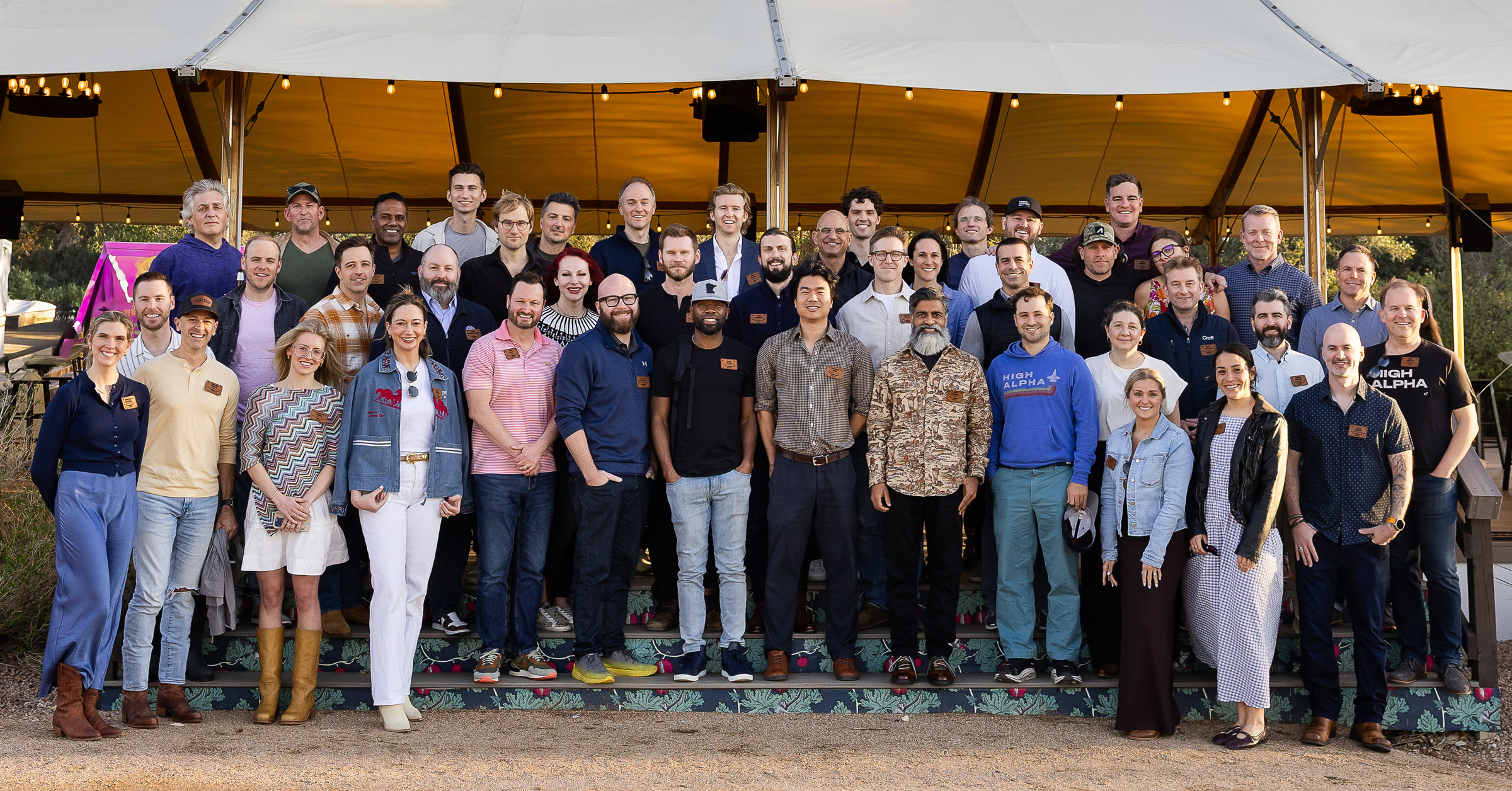
Every year, the High Alpha XO Summit brings together a remarkable group of founders and CEOs who are deep in the work of building something meaningful. This year, High Alpha portfolio CEOs gathered for a few days of honest conversation, sharp thinking, and the kind of connection that only happens when you're away from your inbox and around people who genuinely get it.
From fireside chats and custom Blue Delta jeans to early-morning yoga and, yes, armadillo races, XO 2026 was everything we've come to love about this event — grounding, energizing, and full of moments you won't find on any agenda.
The State of AI and What It Means for Founders
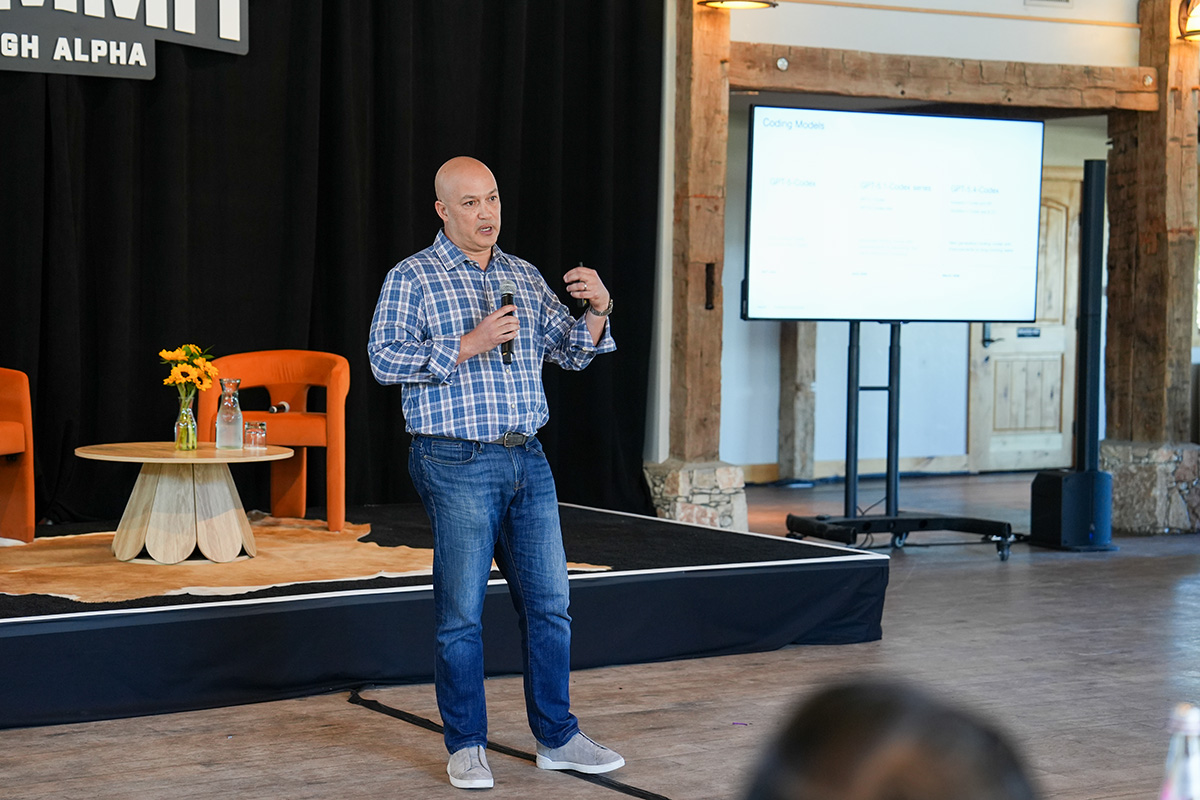
Colin M Evans, Startups and VC Partnerships at OpenAI, opened the programming with a clear-eyed look at where AI is right now, and where it's going faster than most people expect.
The evolution has been remarkable: 2023 was chatbots and basic Q&A. By October 2024, reasoning models had arrived, and one customer support startup jumped from 55% to 80% ticket resolution without human intervention almost overnight. By 2025, agentic AI had taken hold. Now in 2026, Colin described a world of longer-horizon agents capable of meaningful tool use, internet navigation, and autonomous coordination, with frontier research already producing novel physics discoveries and clinical trial automation.
The framing was both exciting and clarifying. Colin emphasized that the capability gap between what models can do and what most companies are actually using them for is enormous. His advice: build robust eval frameworks, maintain model-switching flexibility, and stay model-agnostic. The labs are pushing the frontier, and founders should let them — and focus on what's uniquely theirs to build.
A two-person team today can build with what he called "superpowers" — capabilities that would have required hundreds of engineers five years ago.
The companies taking advantage aren't the incumbents retrofitting AI into existing products. They're the upstarts starting from scratch.
Building Startups That Tech Giants Want to Buy: The Logik.ai Story
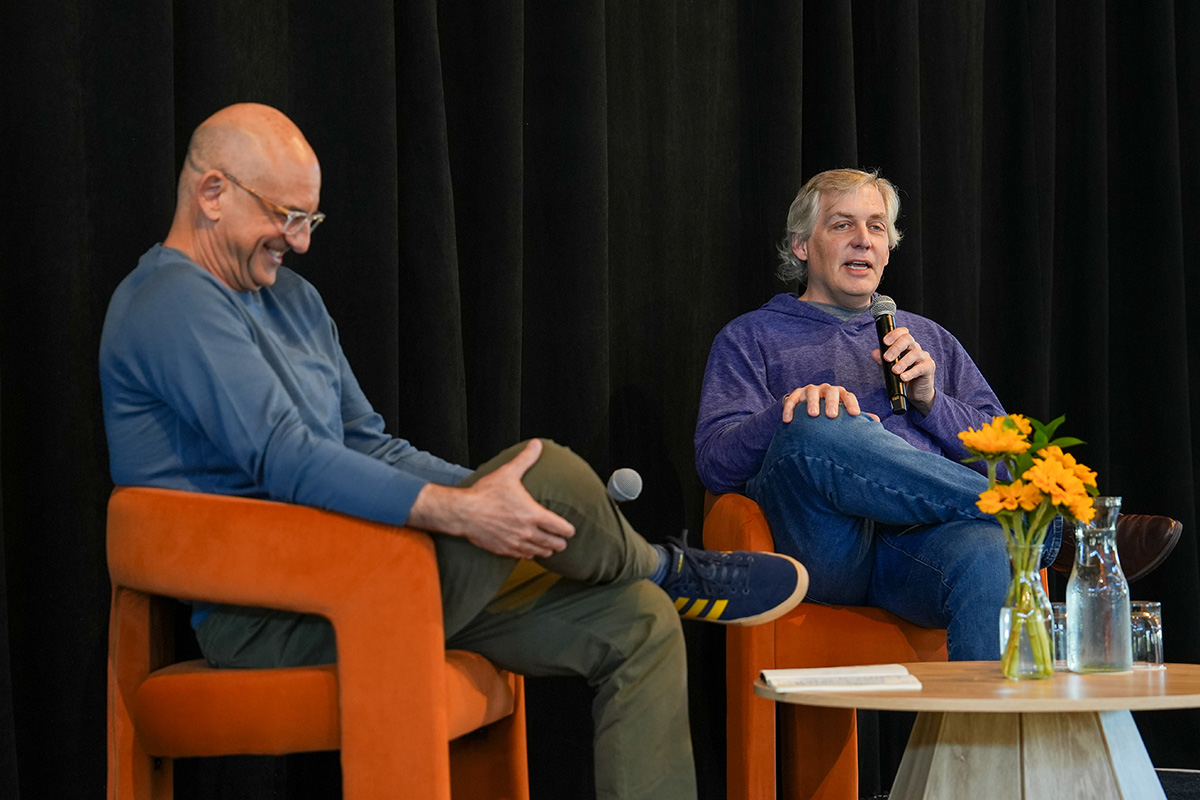
Chris Shutts, Co-Founder of Logik.ai (a High Alpha portfolio company), walked through what it actually looks like to build a company from a cold start to a big acquisition by ServiceNow. All in under five years.
Logik.ai started in October 2020, born from a Salesforce partnership call. By the time ServiceNow came knocking, the company had grown to a business with $180–200K average contract sizes, 140–150% net revenue retention, and zero dissenting board votes in its entire history. That last detail says something.
Chris talked about the discipline of embedding culture into business mechanics — not just posting values on the wall, but making them operational. Board meetings started every quarter with a mission and core values slide. Negative NPS scores triggered a weekly 1pm management review and, when needed, direct calls from the founders.
His advice on M&A was equally direct: build relationships with your dream acquirers long before you need them. Know who the corp dev contact is, who the internal product champion is, and whether you have a CEO-to-CEO relationship. When ServiceNow finally approached, Logik.ai wasn't scrambling to explain who they were. Instead, the relationship had been years in the making.
How to Be Seen: Designing Your CEO Reputation
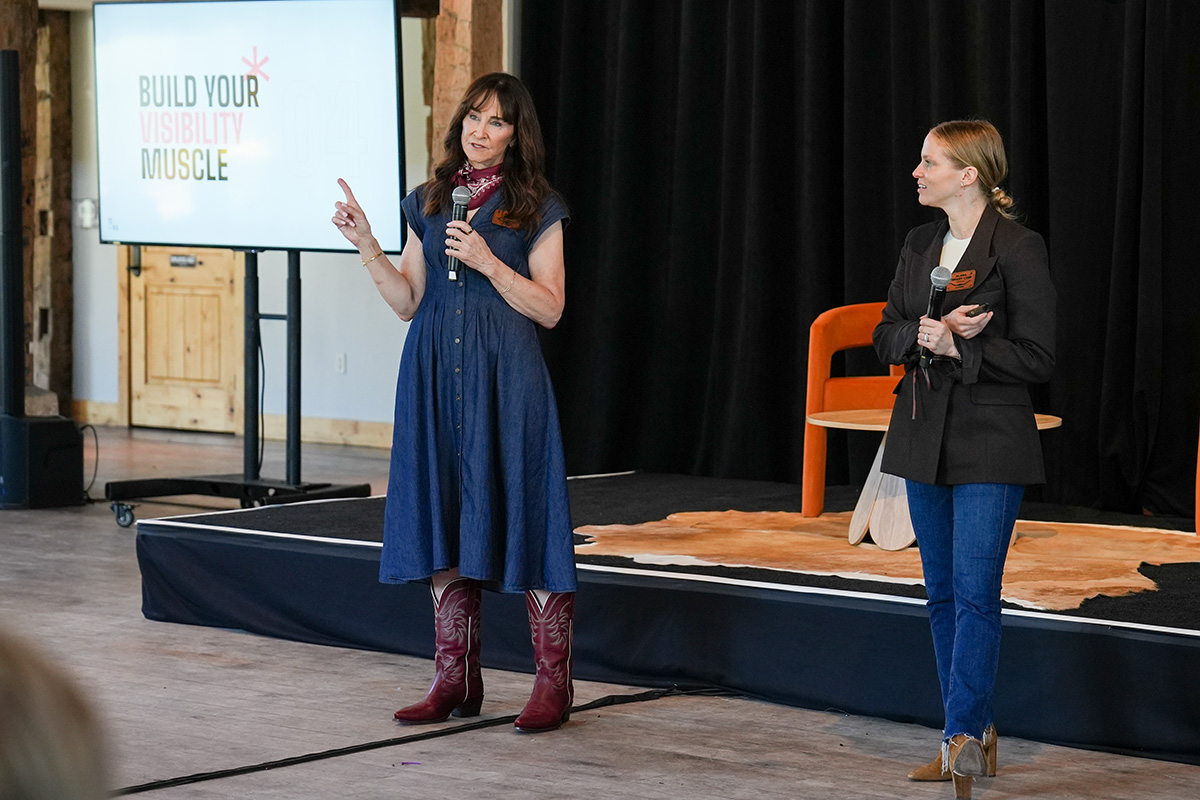
Katy Boos, CEO and Founder at Remix Communications, and Alana O'Grady Lauk, VP of Global Communications at Verkada, delivered what might have been the most immediately actionable session of the summit. Their framework: CEO reputation is 50% of company reputation, and most founders are leaving enormous value on the table by not being intentional about it.
Their five-principle framework covered everything from defining the right business objectives (investors? talent? customers?) to developing a narrow, specific point of view — the kind that gets you invited to speak, not passed over. The distinction they drew between "AI and society" (too broad, no one cares) and "What parenting teaches about managing co-founders" (specific, unexpected, memorable) was one of those moments where you could feel the room's attention sharpen.
They also covered how to engineer access through partnerships when solo stage time feels out of reach, why you should compound every single content appearance into clips, bylines, and media outreach, and why PR should never report to the CMO if you want it done right.
Visibility is a muscle. You build it deliberately, starting small and stacking reps.
Building Tecovas: Boots, Brand, and What Comes After the Grind
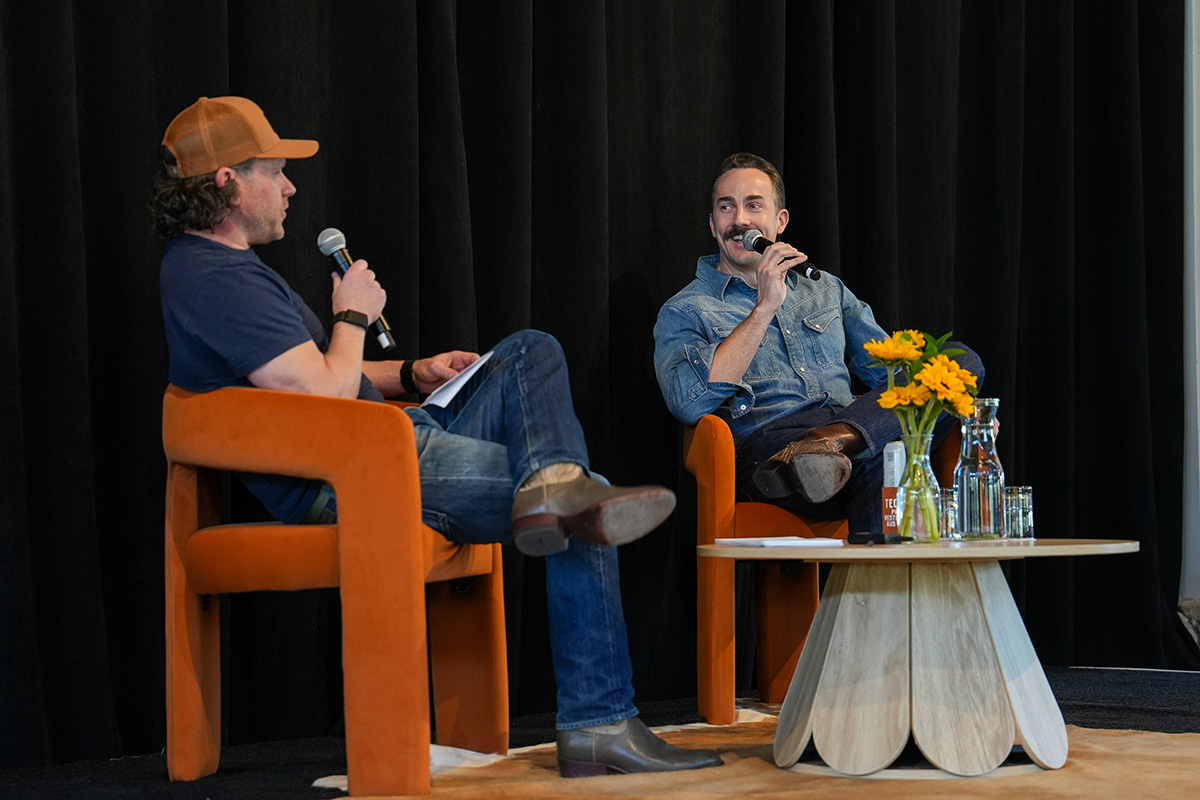
Paul Hedrick, founder of Tecovas, gave a session that was equal parts founder origin story, brand philosophy, and hard-won advice on what happens when the company you built outgrows the version of you that built it.
Tecovas started with a simple observation: there was a massive gap in the Western boot market between luxury heritage brands and cheap mass-market options. No one was playing in the contemporary tier. Paul bootstrapped the idea with a $10K personal commitment rule, cold-called factories in León, Mexico, and spent two weeks on the floor of his first production run inspecting every single pair. "Unlike software," he told the room, "you can't update boots. My reputation was staked on those early pairs."
The company is now targeting $450M in revenue this year, with 57 stores and 1,500 employees. But the most memorable part of Paul's session wasn't the growth numbers, but rather his candor about burnout, about the difficulty of transitioning from founder to chairman while genuinely trusting a new CEO, and about what he'd do differently. His current north star for the brand: Radical Hospitality. Every decision runs through that lens.
Reading the Market: What the Software Pullback Actually Means
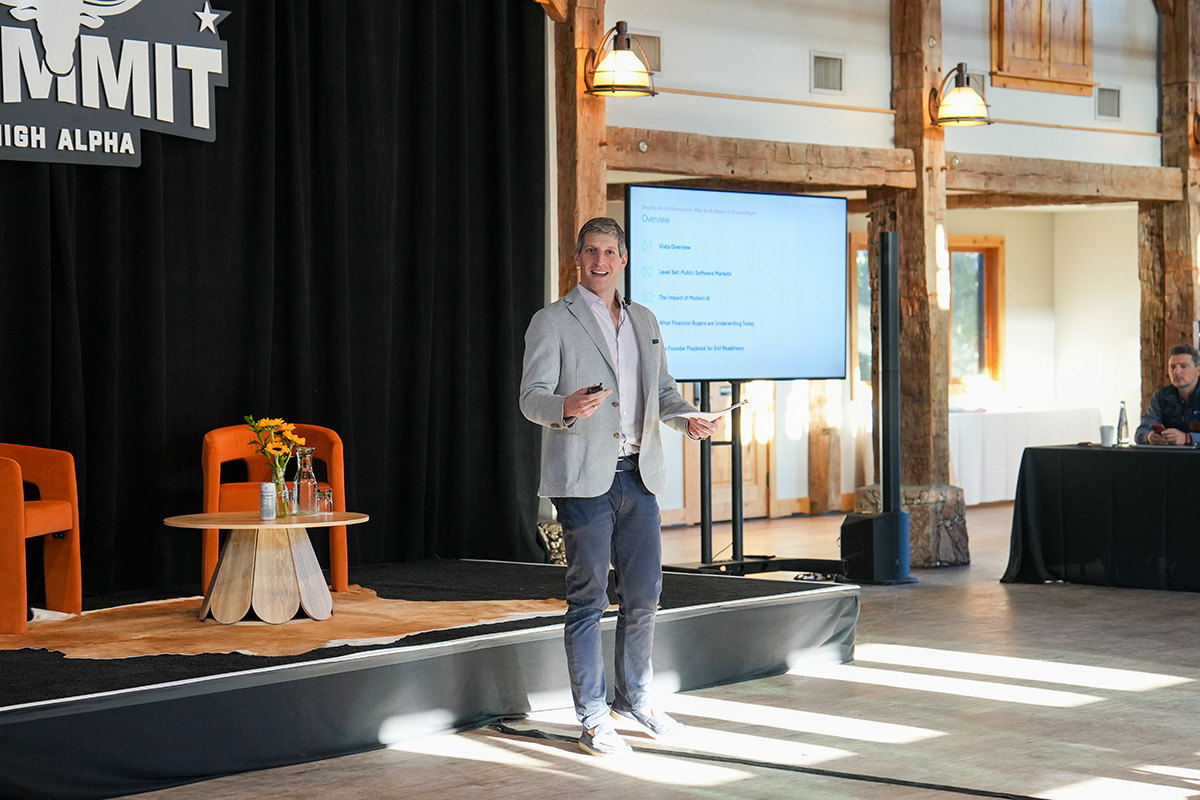
Ryan Atlas, Managing Partner at Vista Equity Partners, tackled the question every founder in the room was quietly sitting with: what does the current environment actually mean for my business?
The recent software pullback has been real — 15 to 30% across the software index — but Ryan's framing was important context: it has been almost entirely localized to the tech sector, driven by AI concerns about software relevance rather than broader economic deterioration. The S&P and Mag 7 told a different story. And historically, downturns of this kind have been followed by recovery within 90 to 365 days, with current valuations in quality companies presenting genuine opportunity.
The bigger point was about what's ahead. 96% of AI revenue is creating new wallet capture, not displacing existing IT spend. The addressable US labor market is $14 trillion, with roughly $5 trillion reachable through automation. The potential long-run value shift to software could reach $1 trillion.
When Datadog traded at 47x forward revenue in 2021, your company probably wasn't worth 47x forward revenue. The same logic applies now, in reverse.
Peek Behind the Curtain: The Rise of Wiz
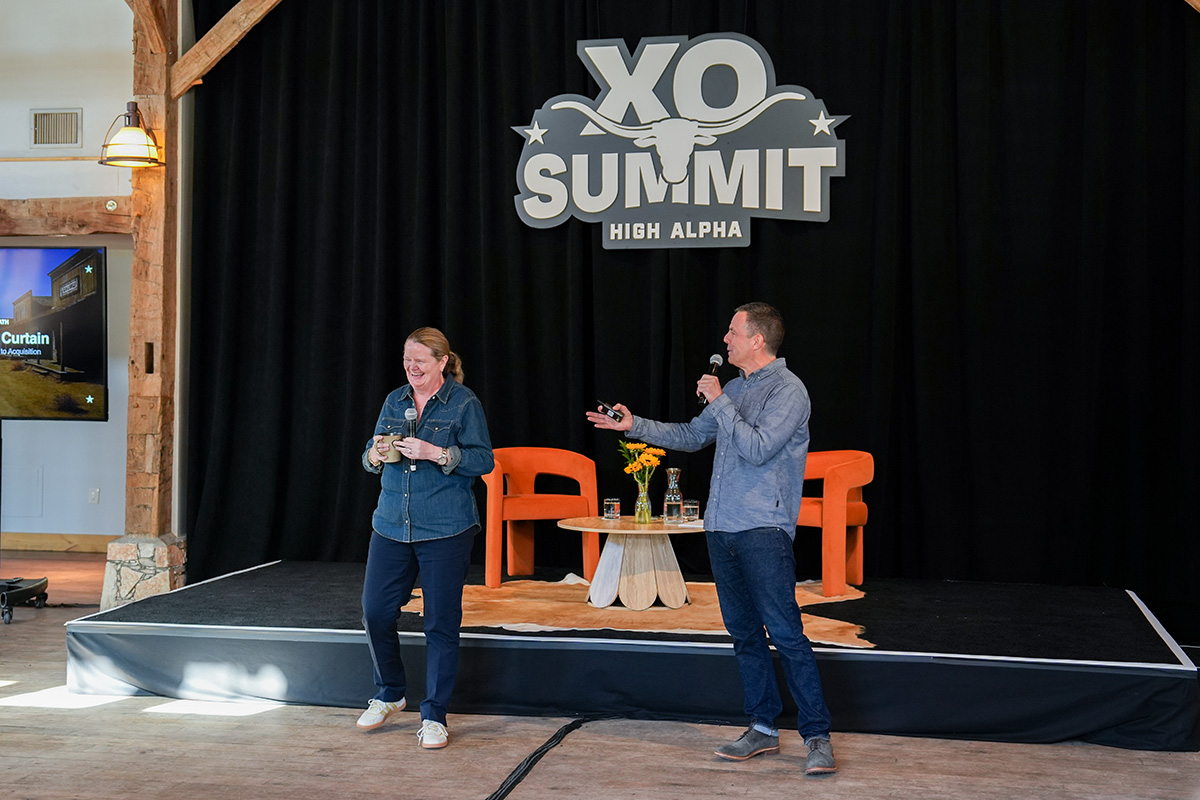
Emily Heath, a SaaS operator and board director at Wiz, followed with one of the most compelling stories of the summit: a deep dive into what actually made Wiz's trajectory possible.
Zero to $100M ARR in 18 months. A $32B acquisition by Google. Those numbers are staggering, but Emily's point was that the speed wasn't magic — it was the result of very specific decisions made very early. Four co-founders with clear, non-overlapping lane ownership. A five-minute integration and sub-two-week POCs that eliminated friction at every entry point. A platform architecture built from day one, not retrofitted later. And a CEO, Assaf Rappaport, described by Emily as maniacally customer-obsessed in a way that permeated every layer of the company.
She also introduced a framework for thinking about how companies need to position their AI capabilities: table stakes (catching up to what the market already expects), innovation-first (temporary advantages that get competed away), and unique capabilities — the sustainable differentiation that's actually hard to replicate. Most companies, she argued, are spending the bulk of their energy on the first two and not nearly enough on the third.
The urgency was clear: competitive moats are shrinking faster than historical norms, and every executive in the room should already be automating their lowest-value work. Not to cut costs, but to free up the human capacity to build what actually lasts.
Beyond the Sessions
The programming only tells part of the story. XO Summit 2026 was also early-morning HIIT on the lawn, guided fishing, hatchet throwing, archery, an alpaca experience and an impromptu poker game. Blue Delta Jeans set up custom denim fittings patterns and a vineyard dinner with a fireside conversation under the stars closed out the first full day.
The armadillo races were exactly what you'd expect, and also somehow better.
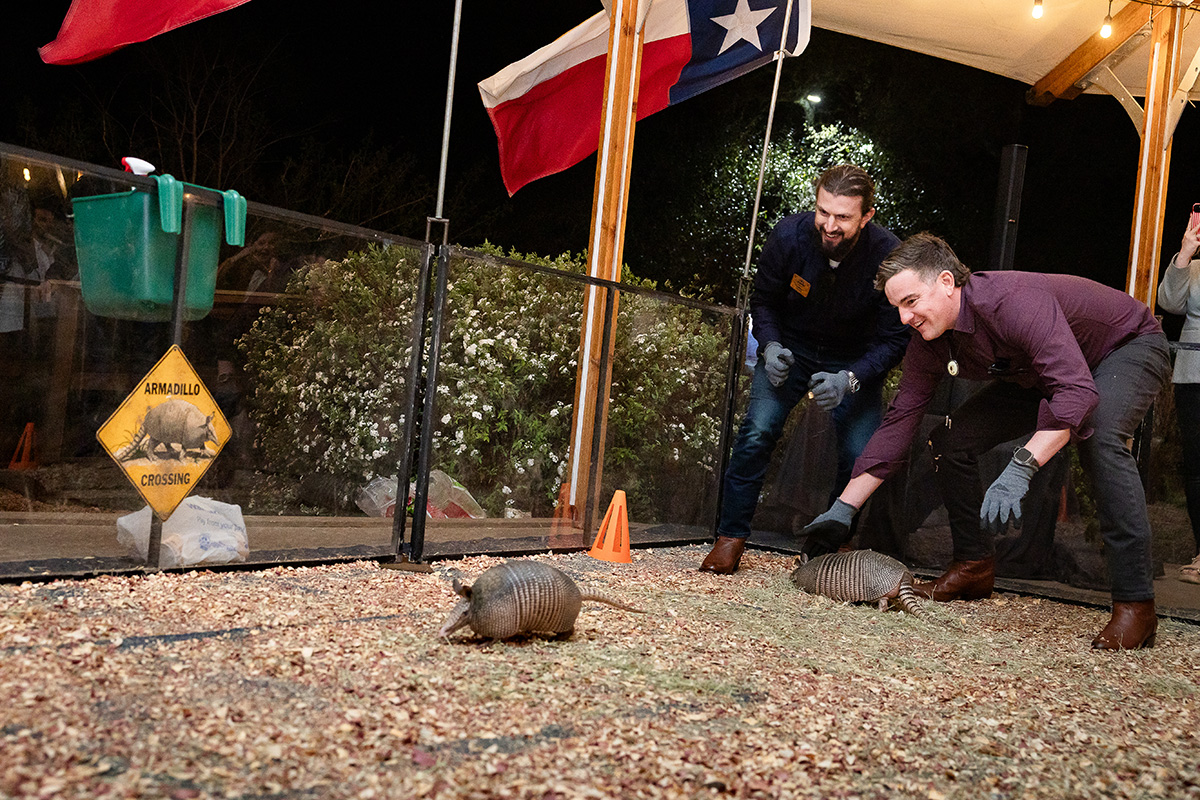
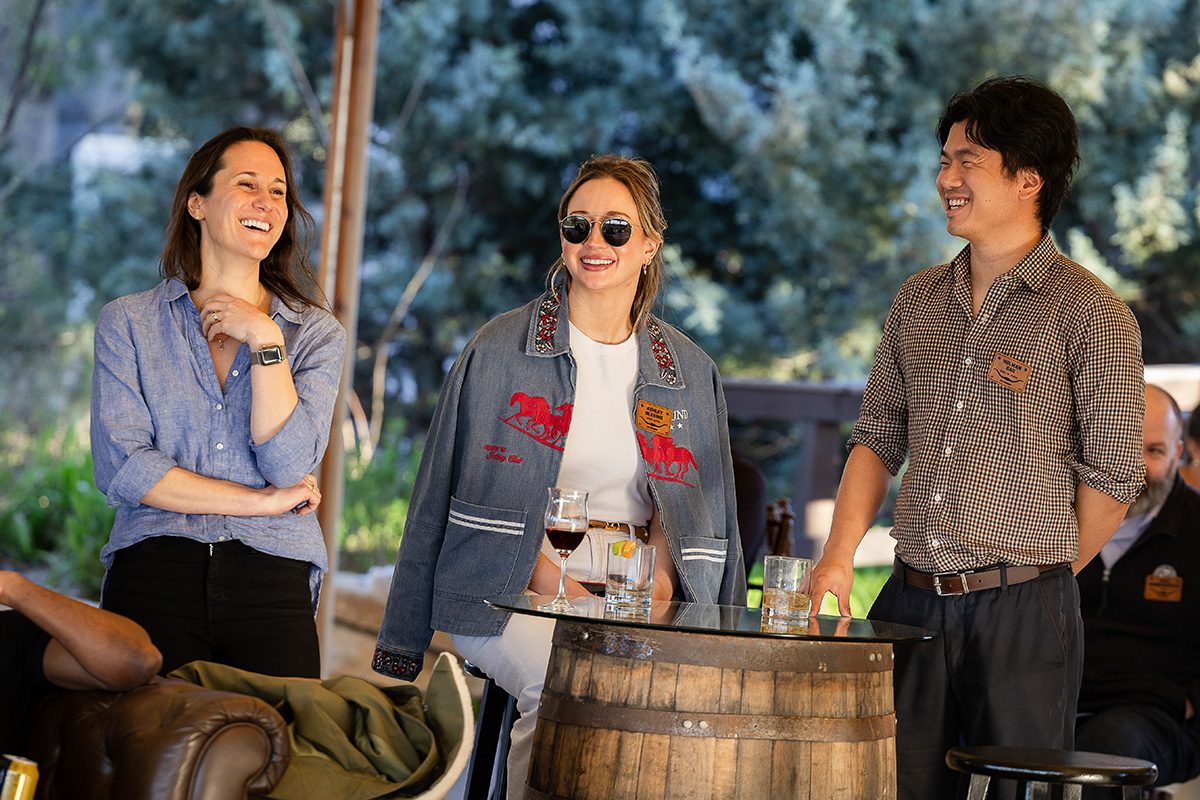
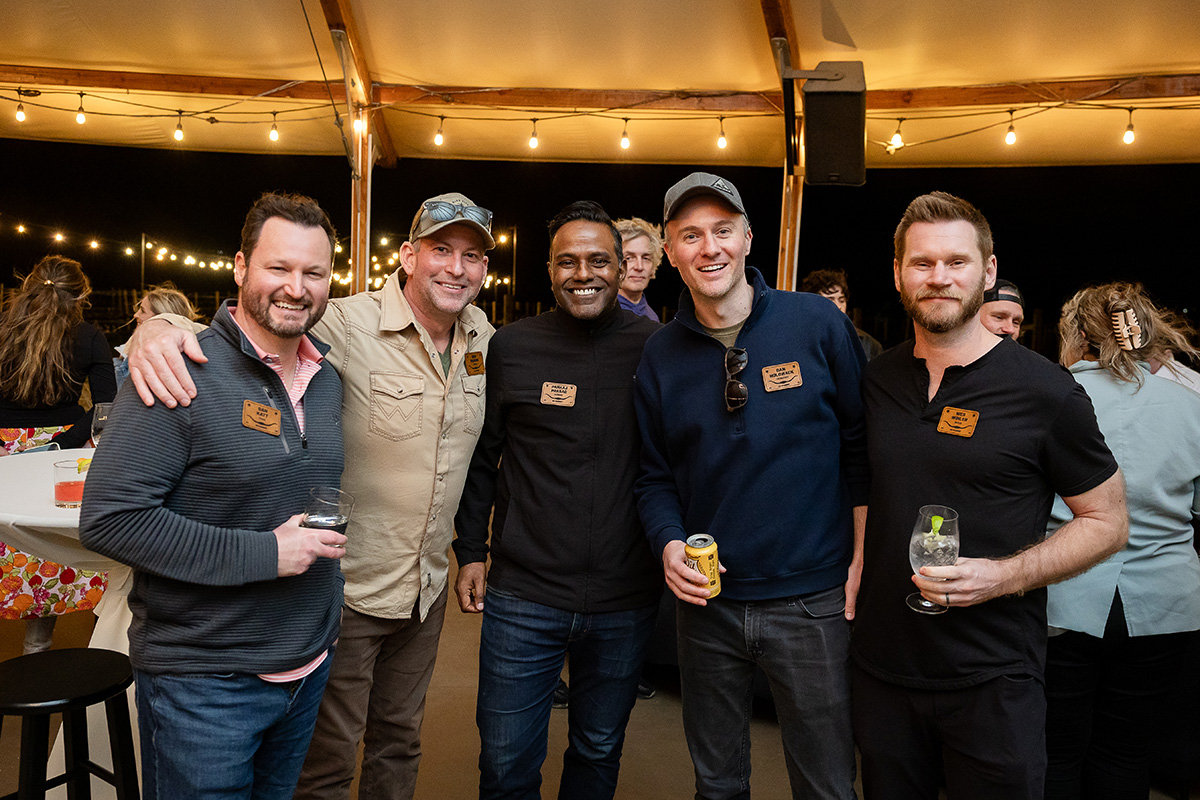
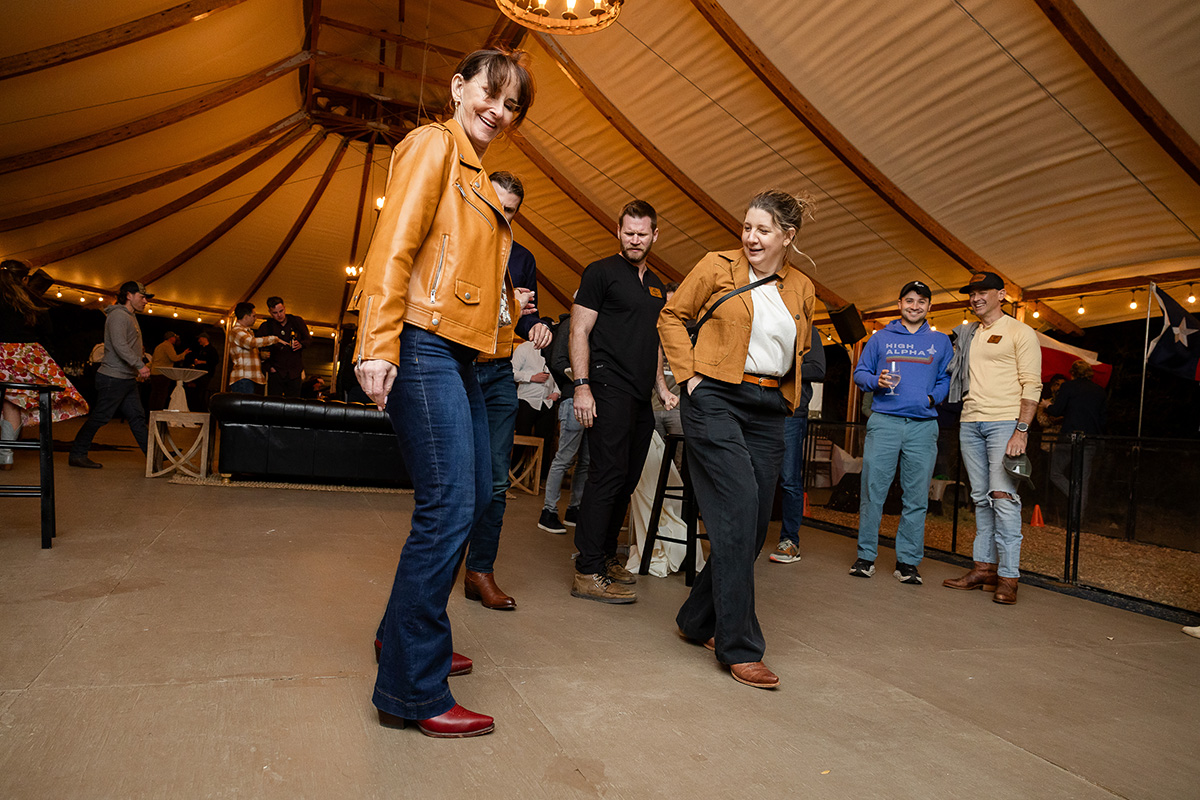
More than any single session or activity, though, XO is about the conversations that happen in between — the ones at breakfast, on the walk between venues, or over a late pour at the end of the night. A group of founders and CEOs, all building something hard, all willing to be honest about it.
That's the thing that keeps people coming back.
